1.5/10
Number of watches at time of review: 1
synopsis
In 2006, a team of Navy SEALs set out on a mission in Ramadi, Iraq. Warfare tells the events of that day through the lens of the soldiers’ memories.
spoiler-free review
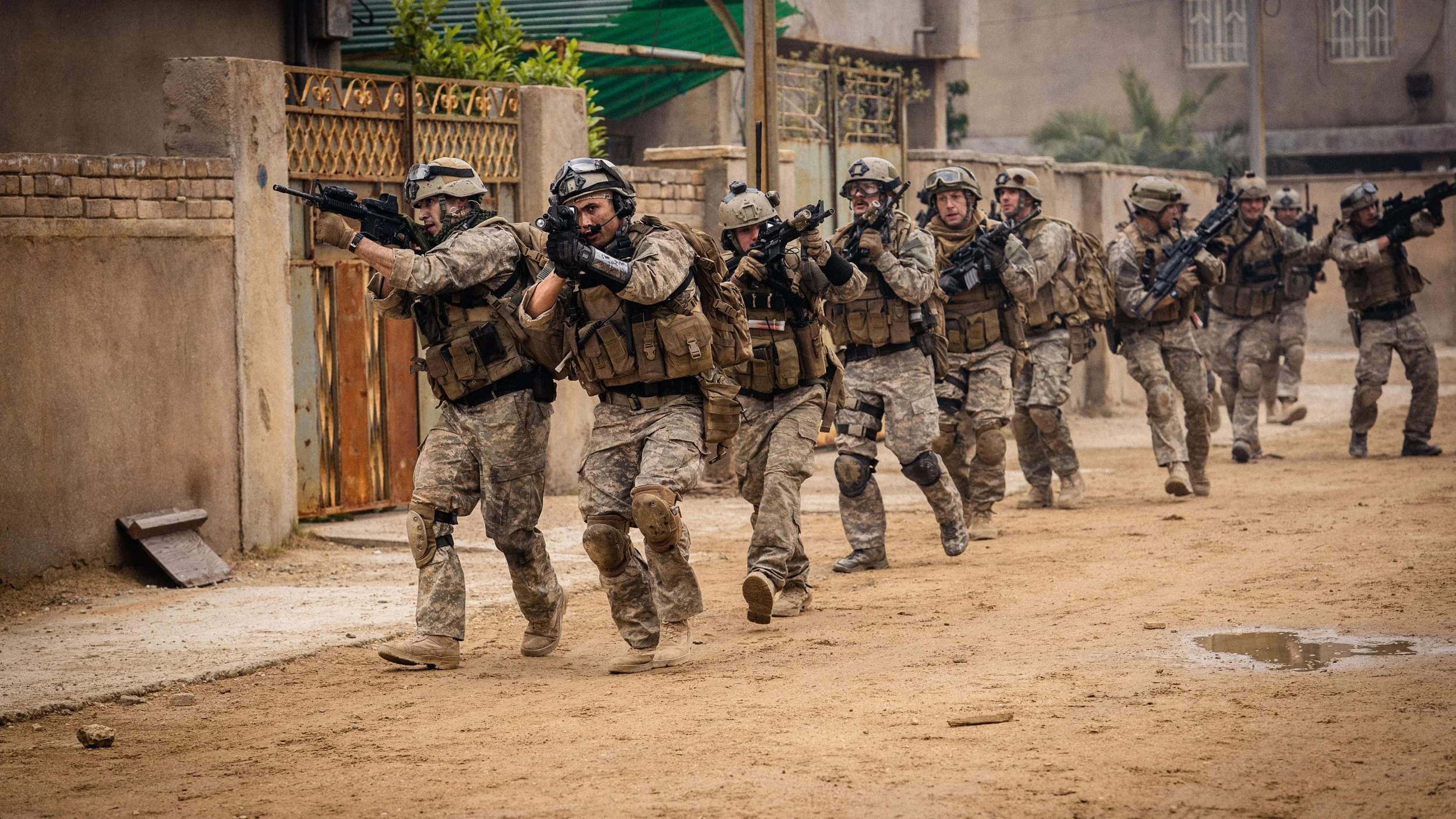
A real-time war film lacking any nuance, Warfare is an hour and a half of a strange mix of boredom and tension. The tension is almost entirely due to some well-done sound design (though nothing that hasn’t been done many times before) and the fact that, as with any war movie, there are horrific injuries and uncertainty about what’s to come next. This tension, however, is not enough to make up for what the movie is lacking in nearly every other department. The only other area where the film shines is in its actors, who do a magnificent job of feeling like real people on the screen.
In setting out to recreate the exact events of the mission this squad went on, writer/directors Alex Garland and Ray Mendoza completely fail to make a comprehensive and engaging film. The movie plays out without any thesis—the film simply is.
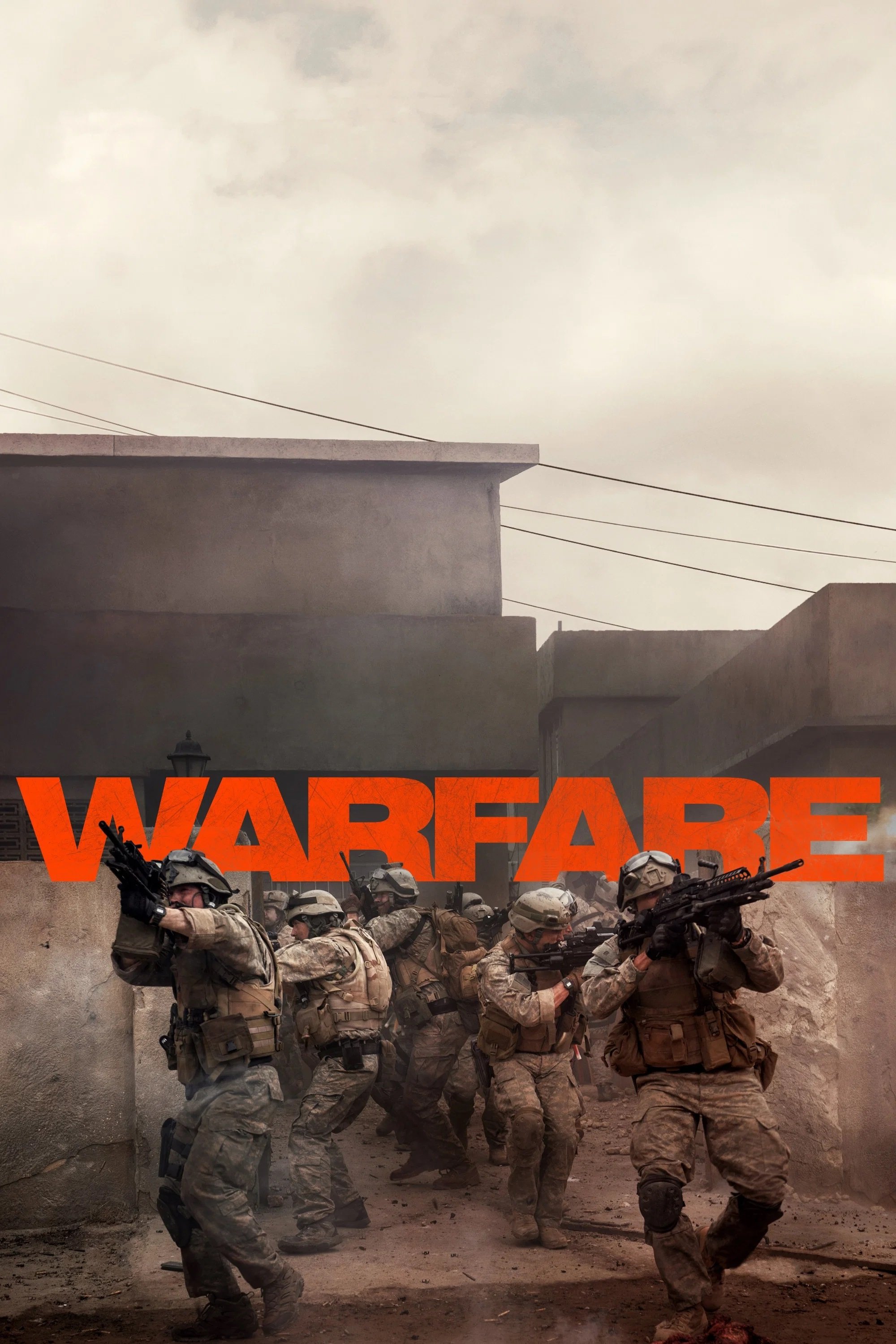
Warfare (2025)
directed by Alex Garland and Ray Mendoza
written by Ray Mendoza and Alex Garland
cinematography by David J. Thompson
spoiler review
I’d like to begin this review with a quote that many have revisited in light of this movie: “…not only will America come to your country and kill your people, […] they’ll come back twenty years later and make a movie about how killing your people made their soldiers feel sad.” - Frankie Boyle
I believe this quote perfectly illustrates the main issue of Warfare, which is its lack of empathy for the civilians harmed by the invading American soldiers (or even acknowledgement beyond throwaway lines). While I understand that the soldiers depicted may not have strong memories of the Iraqi family whose home they occupied, and therefore Garland and Mendoza weren’t able (in the rules they set for themselves) to give much character to them, that should have been the first sign that this using this concept for a film was a bad idea. Any historical film from the perspective of perpetrators of extreme violence that does not take the time to examine the victims of said violence is immediately neutral, at best, in its attitude towards that violence.
The consequences of the violence taken against the American soldiers is shown in detail: we spend a good deal of the film with the Americans in the aftermath of an explosion from an IED planted by the unnamed Iraqi insurgents they’re fighting against. We see the extent of their injuries and feel their pain through excellent performances by the ensemble cast. The same care is not extended towards any of the Iraqi citizens portrayed in the film, even the two Iraqi soldiers who worked with the American team. Instead, the pair of them are depicted as cowardly and good for nothing other than as cannon fodder.
Even the American soldiers with whom the entirety of the film is spent have little-to-no personality shown beyond following orders. The only time any sort of personality showed through was during the few moments of levity, all of which were either crass or misogynistic; and while that may be true to life, it does not reflect well on the men or give reason to connect to them.
The writing in general was pretty poorly done: the film’s dialogue was almost completely military jargon—which again, may be true to life, but when adapting a true story to film there should be some attempt to make it comprehensible for the average viewer.
Another area where the film falters and becomes confusing is in its sense of space. The house that almost the entirety of the film takes place in is not shown in a manner that allows the viewer to understand the layout. The soldiers are shown in different rooms, and over time it’s obvious that they’re all in that one house, but at first there’s no evidence they’re even in the same building. Not to mention the lack of explanation of the surrounding city; building codes are called out many times, but not once is it clear to the viewer which of the buildings they mean. There’s no understanding of how near the insurgents are or where they’re coming from. This flaw is partially due to lackluster directing: there are no shots that bring the viewer through the space in a cohesive way, simply jump cuts from room to room.
personal connection
I will be the first to admit that I have no fondness for war films such as this: ones that follow soldiers in the midst of battle, carrying out orders set by people that aren’t even seen on screen. I much prefer war films such as Oppenheimer and The Imitation Game, ones that take the time to examine the bureaucracy of the military system. While those films are still flawed in their own ways, I find them much more compelling as stories and less a glorification of war.
final thoughts
In times such as these, where America is carrying out absolutely despicable actions overseas, it is downright irresponsible to release a film such as this. A film that depicts any sort of heinous violence as righteous, especially against West Asian people during the current political climate, is dangerous in its excusal of such actions.
When making a movie, there has to be a stage in the process where one self-reflects and asks “Why am I making this? What purpose does it serve?”, a step that seems to have been completely skipped over by Garland during the creation of Warfare. As for Mendoza, he claimed in an interview with The Guardian that Warfare allows soldiers and veterans to feel understood, as opposed to most war films which “[are] actually embarrassing to watch” because of their disconnect from reality, something that sounds like it could have been accomplished by a documentary just as well. For Mendoza, it was also a therepeutic undertaking to recreate the events that occured. In the same interview, he stated “Writing with Alex was more like going to a therapist every day than going to a writing session […] It’s comforting because you feel heard and you feel understood.” It seems that what Mendoza got out of his experience could have been accomplished with a diary and spending time with a friend, rather than by creating a film that has nothing to say.
In the end, Warfare became an exercise in pushing what Hollywood executives could be convinced to greenlight despite lacking anything that makes a film compelling. It’s an hour and a half of confusion at best, and boredom at worst.